Payroll Services UK: Running PAYE, RTI and Auto-Enrolment Across a Client Portfolio

Payroll is the one service line in a practice where the deadline arrives every month, the errors are visible to the client’s employees within hours, and there is no quiet season to catch up in. This article walks the full monthly cycle, names what goes wrong at each stage, and sets out the control that […]
Hotel Deposits and Deferred Revenue: Advance Bookings, Cancellations, and No-Shows

A deposit taken in November for a stay in March is cash in the bank, a VAT liability this quarter, and not revenue until March. Those three facts pull in different directions, which is why advance bookings are the most commonly misstated figure in hotel accounts. This article sets out the right treatment for deposits, […]
Restaurant Food Cost and GP%: Theoretical Versus Actual, and Why the Gap Matters

Every restaurant has two food gross profit figures. One comes from the ledger and says what actually happened. The other comes from the recipes and says what should have happened. The distance between them is the most useful number in a restaurant’s accounts, and most sites cannot produce it. This article shows how to calculate […]
Payroll Outsourcing UK: When It Makes Sense for a Practice and When It Doesn’t

Payroll outsourcing is usually sold as though the answer is always yes. It isn’t. Outsourcing a payroll bureau solves a volume and capacity problem well, and solves a complexity problem badly. This article sets out which situation you are in, the handover risks specific to payroll, and who carries the liability when a submission goes […]
Optometry, Physiotherapy and Osteopathy: Accounting for Allied Health Practices

Introduction An optometry practice reports higher sales than last year, but its bank balance is barely moving. NHS sight-test receipts are recorded with retail income, frame purchases are expensed without a reliable stock movement and the associate payments are posted as a single monthly cost. The partner asks why profit has not followed revenue. An […]
Deemed Contractors: When a Property Developer or Landlord Falls Into CIS

Introduction A property investment business has spent £3.2 million refurbishing offices and rental units in the past year. Nobody calls it a construction company. Its accounts team books the costs to property improvements, pays builders in full and files no CIS returns. Then an adviser asks whether the business has crossed the deemed contractor threshold. […]
CIS Gross Payment Status: Qualifying, Keeping It and What Triggers Removal

Introduction A subcontractor invoices £50,000 of labour in a month and plans wages and suppliers around being paid in full. Then an HMRC letter arrives questioning its gross payment status. If that status is withdrawn and its contractors start deducting 20%, the next month’s cash receipts could be £10,000 lower. The tax has not increased […]
Self-Employed Bookkeeping: The Records HMRC Expects and What Your Accountant Needs
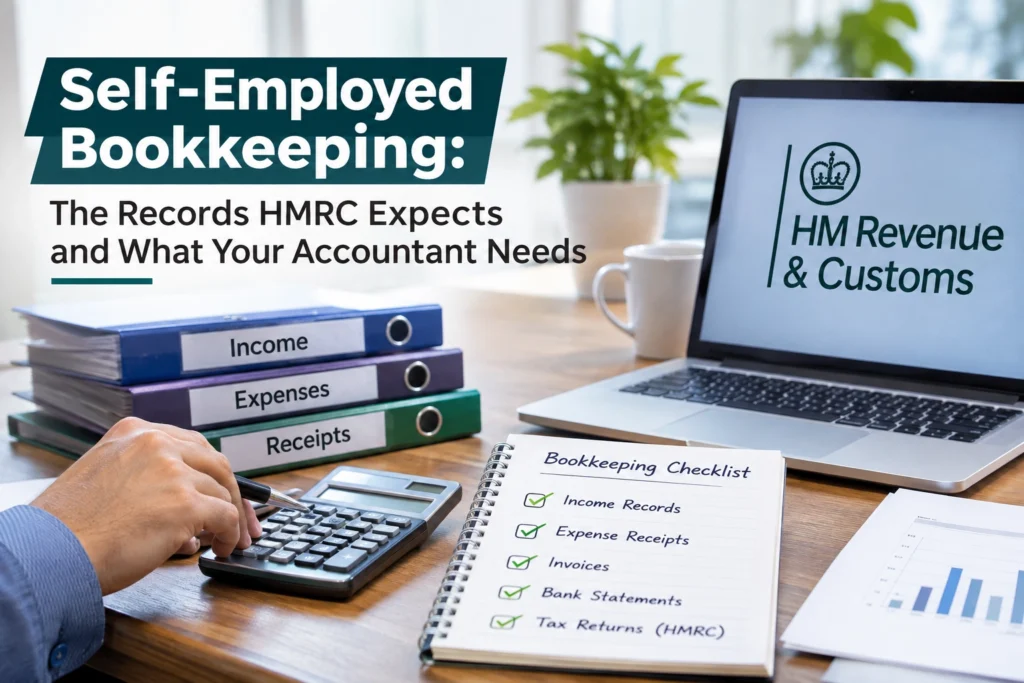
Introduction A self-employed electrician turns over £58,000 a year. Every January he hands his accountant a carrier bag. Inside are about 400 receipts, statements from three bank accounts (two of them personal) and a note saying “sorry, it’s a bit of a mess this year”. The accountant spends nine hours separating his groceries from his […]
Outsourced Bookkeeping Services UK: What Leaves the Practice and What Never Should

Introduction A practice with 120 bookkeeping clients decides to outsource. Three months later, half the partners think it’s the best decision they’ve made and the other half want to bring everything back in-house. On the files that work, a manager reviews a month’s bookkeeping in 30 minutes and signs it off. On the files that […]
Bookkeeping Catch-Up Work: Rescuing a Client Ledger Before Year-End

Introduction It’s late October. A practice manager opens a client’s Xero file for the first time since spring. The bank shows fourteen months of unreconciled transactions and the suspense account holds £38,000. The aged creditors report lists £21,000 of bills that were paid a year ago. Then the client sends a message asking whether the […]